
A one-day summit for hospital CEOs, CFOs, CIOs, CMOs and operational leaders.
Thursday October 29th, Collins Square Events Centre, Melbourne
A one day summit followed by networking drinks
Brought to you by The Medical Republic, Health Services Daily, and Wild Health
The hospital system is not being replaced. It is being restructured from the inside, and faster than most leaders realise. AI is no longer a pilot. Virtual care is no longer a workaround. New models are live, generating evidence, and beginning to change what it means to run a hospital. This summit demonstrates what is actually in play today through live on-stage technology demonstrations and sharp, evidence-led debate, and asks the harder questions about what it means for hospital economics, workforce and patient experience in the five years ahead.
Thursday 29th october
FULL-DAY summit
Registration, Coffee and Breakfast
7:30am – 8:30am
Main theatre set up for live demonstration from 7:30am. Demo runs from 8:00am – 8:30am while delegates are still arriving and settling. Demo to be confirmed.

Welcome and Scene Setting
8:30am – 8:50am

Opening Keynotes
9:00am – 9:30am
When is the Hospital Not the Centre Anymore?
The structural shift from episodic, bed-fill funded care toward continuous, community-anchored care is no longer a policy aspiration. It is happening — unevenly, not funded correctly, and largely despite the system rather than because of it.
What is actually changing in how hospitals define their role, what the current funding model can and cannot support, and why the decisions made in the next two to three years will determine whether Australian hospitals lead the next chapter of healthcare or spend a decade catching up.
The hospital as a destination is being replaced by the hospital as a node in a care network. AI and virtual care are the infrastructure of that network. The funding model has not caught up. What happens next.
Panel: Virtual Care, Hospital-in-the-Home, and the New Front Door: What’s Actually Working?
9:30am – 10:05am
The Victorian Virtual ED. Healthdirect’s avoidance data. HITH programs across three states. Remote monitoring and the at-home acute care model.
This panel examines the evidence on what virtual and community-based models are genuinely reducing hospital demand — and is honest about what the data does and does not show.
Topics:
- How much is Healthdirect actually reducing ED presentations, in which patient cohorts, and what does that do to the hospital’s NWAU count?
- What do the frontier LLMs mean for a national digital front door and how is that likely to impact hospitals?
- What does HITH scale-up genuinely require — in workforce, technology, governance and liability — that most hospitals are not yet doing?
- Where does virtual care create new demand rather than substituting for existing demand?
- Is avoidance a net win for hospital budgets or does it just shift the problem?
- What are the equity implications? Are we building a two-tier system where virtual care works beautifully for patients who are health-literate and digitally connected and fails everyone else?
- What are the funding constraints and can they be worked on in the current NHRA?

Panel: The Blocked Hospital AI and virtual care models
10:05am – 10:30am
Access block and bed block remain the defining operational failures of the Australian hospital system. Every new technology generation promises to fix them. Most don’t.
This panel asks a deliberately uncomfortable question: is AI going to materially shift the access block problem, or are we once again deploying sophisticated tools into a structural problem that technology alone cannot solve? And beyond AI inside the hospital walls, this panel examines how virtual care and at-home acute care models can extend the hospital’s capacity — keeping patients who don’t need a bed out of one, and supporting earlier discharge for those who do — and what that genuinely requires to work at scale.

Morning Tea
10:30am – 10:55am
Live Demo 1: Optimising AI scribes in a hospital setting
10:55am – 11:15am
AI scribes are delivering real gains in clinician productivity and wellbeing — but left unmanaged, hospitals are ending up with a dozen different tools purchased department-by-department, none of them talking to the patient record. This session looks at how some jurisdictions are moving from ad hoc adoption to a deliberate, governed strategy: how many scribes can (or should) one hospital support, why deep integration with the PAS/EMR matters more than the transcription quality itself, what good governance looks like, and how to get clinicians onto a sanctioned tool fast enough that they don’t default to consumer apps on their own phones.
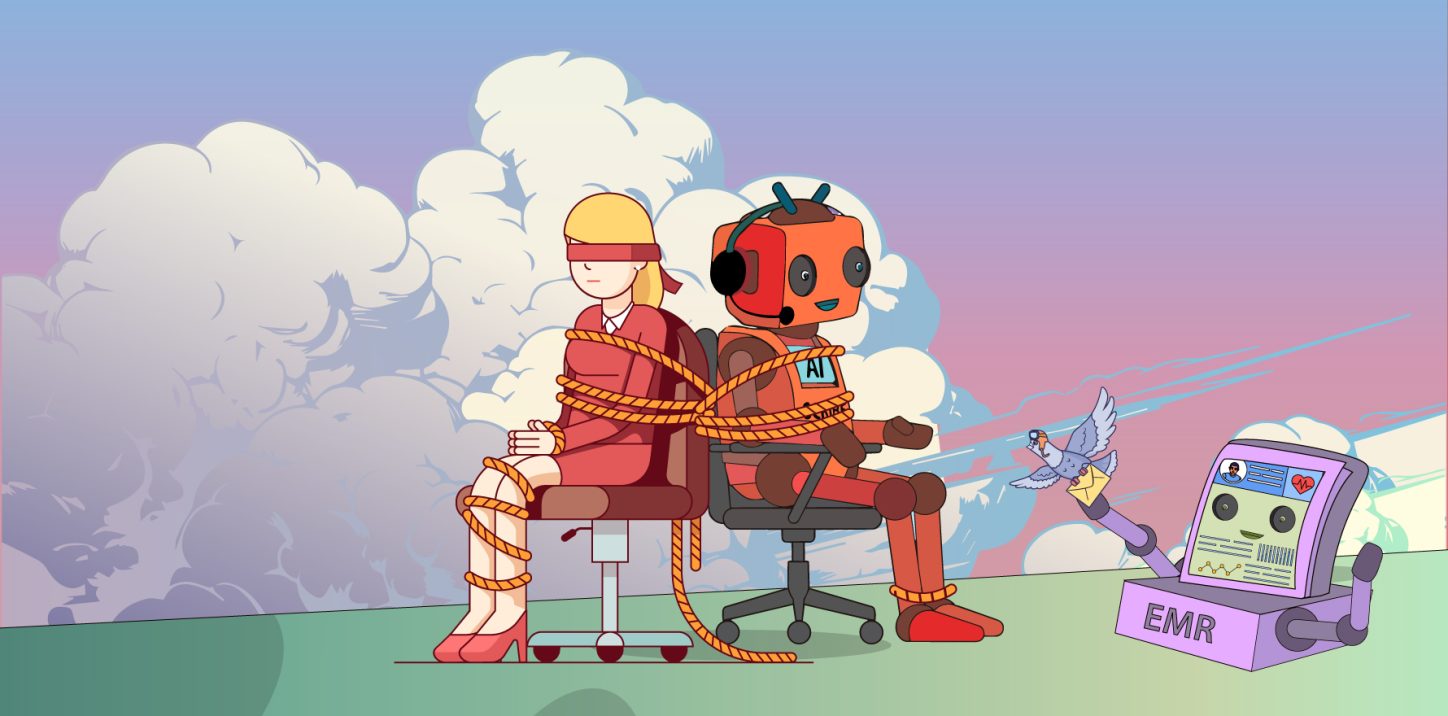
Session + Live Demo 2: E-Referrals, Advice and Guidance, and the Connected Patient Journey
11:15am – 11:35am
“300 Manual Steps. A Fax Machine. A Manila Folder. It Doesn’t Have to Be This Way.”
When Associate Professor Vikram Palit — a paediatric respiratory physician and the CEO of ConsultMed — accompanied his mother through a total knee replacement at a private hospital, he counted almost 300 manual steps across the entire journey: the referral, the admission paperwork, the WhatsApp messages, the envelope full of documentation on transfer, the paper scripts, the discharge summary arriving days late. The clinical care was excellent. The infrastructure holding it together was fax machines, sticky notes, and goodwill. This session demonstrates what that same journey looks like when it is done properly — with technology that exists today, is already live in Australian hospitals, and does not require waiting for the next federal infrastructure program.
The session combines a live demonstration of Sonia’s Journey — an end-to-end digital patient pathway from GP referral through specialist triage, imaging, surgery, e-scripts, discharge, and correspondence back to the GP — with a panel that applies the evidence to the questions hospital administrators actually need answered: what does advice and guidance do to outpatient waitlists, who pays for it under the current MBS, why have hospitals been slow to adopt eScripts six years after rollout, and what would it take for a state health department to mandate this kind of connected infrastructure across its hospital network?
Live Demo 3: Three AI hospital scribe implementation case studies
11:35am – 11:55am
- NSW Health’s centralised hospital AI scribe tender
- Victoria’s NSW’s Victoria’s policy-first/scribe-specific AI guidance framing model, and
- Results from bottom-up pilots being run by the major Australian scribe vendors

Hospitals and the Informed and connected patient and carer, that the system wasn’t built for
11:55am – 12:25pm
While hospitals focus on institutional AI, the patient-side AI revolution is already happening and accelerating. Claude Health and ChatGPT Health are putting sophisticated clinical reasoning tools directly in the hands of patients — before, during and after hospital encounters.
At the same time, consumer health data is exploding: Oura rings, Apple Watches, continuous glucose monitors, home ECG devices and a rapidly expanding range of diagnostics are generating a stream of longitudinal health data that patients now carry into every clinical encounter. Some of that data will connect directly to hospitals through My Health Record and emerging interoperability frameworks. Some patients are already feeding it to AI tools for interpretation before they see a clinician.
The hospital system was built around the information asymmetry between clinician and patient. That asymmetry is collapsing — from both directions at once. This panel examines what that means for hospitals, for clinical relationships, and for a funding model that was not designed for it.

Lunch
12:25pm – 1:25pm
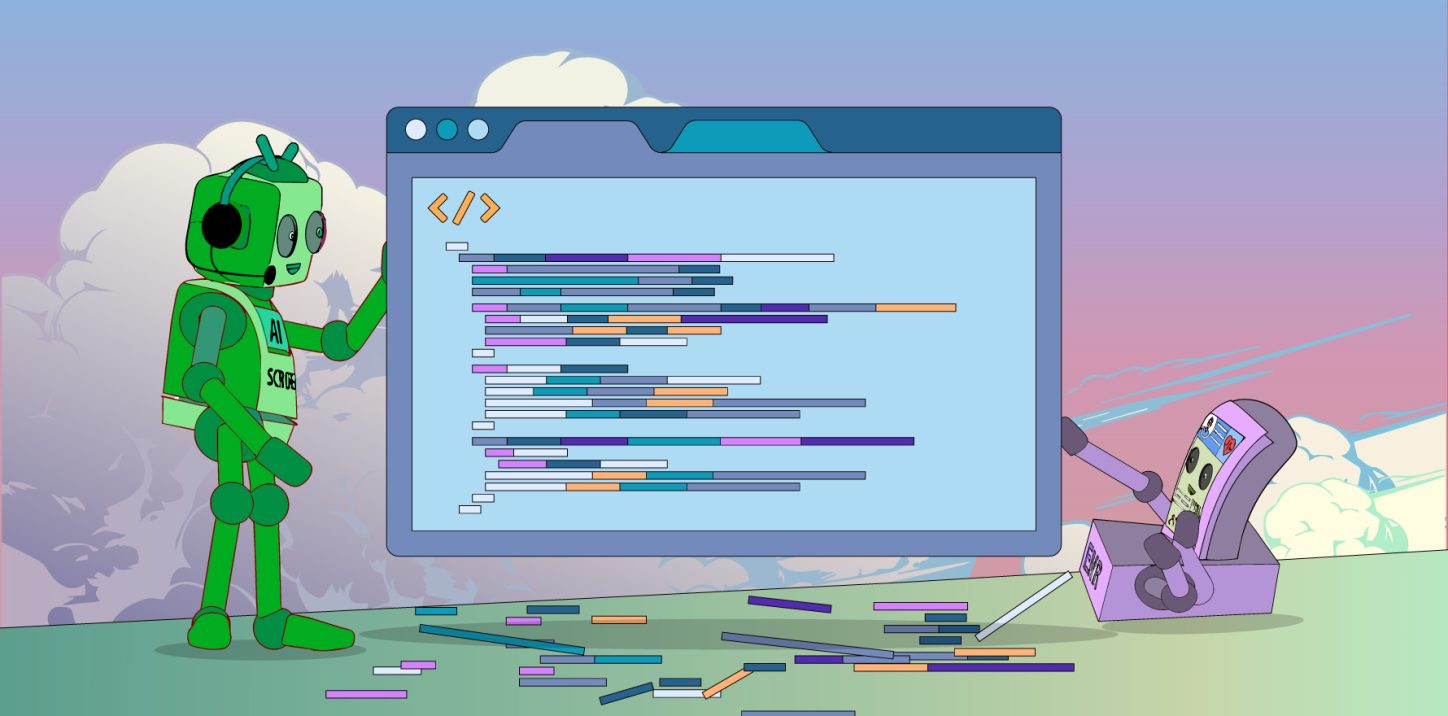
Live Demo 4: AI Clinical Coding in Action
1:25pm – 1:45pm
A focused 20 minute live demonstration of AI-assisted clinical coding — showing how AI reads clinical documentation and generates ICD-10-AM, ACHI and AR-DRG output in real time, with an audit trail. Directly sets up the coding and workflow questions in the panel immediately following.

Session + Live Demo 5: Amazon Connect Health — What the UC San Diego Pilot Means for Australian Hospitals
1:45pm – 2:05pm
The Phone Call That Shouldn’t Need a Human. The Discharge Summary That Shouldn’t Need a Doctor. What Happens When AI Handles Both?
Amazon Connect Health is AWS’s purpose-built agentic AI platform for healthcare providers, launched in March 2026. It is not a concept. It is in production. At UC San Diego Health — a system handling 3.2 million patient interactions a year — it is already saving one minute per call, redirecting 630 hours of staff time weekly from patient verification to direct care, and cutting call abandonment rates by 30 to 60 percent depending on department. This session asks the direct question Australian hospital administrators need answered: what does this actually mean for us — in our funding model, our public or private context, our workforce constraints, and our digital infrastructure as it stands today?
The session runs in three parts: a short scene-setting presentation from Jill Freyne (AWS Healthcare Industry Lead, ANZ) on what Amazon Connect Health does and what the UC San Diego evidence actually shows; a live on-stage demonstration against named Australian hospital problems; and a short panel applying the results to the Australian context — both public and private — with honest assessment of what transfers and what doesn’t.
AFTERNOON TEA
2:05pm – 2:30pm

Panel: Australia Just Locked In Five Years of Hospital Funding. Now What?
2:30pm – 3:00pm
The National Health Reform Agreement Addendum is signed. The Commonwealth contribution is set. The National Efficient Price will recalibrate if system-wide coding patterns shift. There is no cavalry coming in the form of federal largesse — at least not for the next five years. This panel has the conversation that most vendor presentations carefully avoid: what does AI actually do for hospital economics inside a fixed funding model, and where is the ROI case being oversold?
Live Demo 6: The hospital data integration and workflow problem and AI
3:00pm – 3:20pm
Many Australian hospitals still run on a patchwork of legacy EMRs, bed boards, pathology systems, and rostering tools that don’t talk to each other very well or not at all. Overlay framing (AI sitting on top of existing systems to unify real-time data) and framing “care intelligence ecosystems” are strategies starting to solve the problem for some hospitals in Australia, now at increasingly more sophisticated and effective levels. This session looks at the latest developments, some overseas implementations that would work well here, and how some AI vendors are solving this problem locally for hospitals.

Panel: The Real AI Dividend: Can Hospitals Do Significantly More With What They Have?
3:20pm – 3:50pm
Having been honest in the previous session about the revenue ceiling, this panel makes the affirmative case — deliberately. The workforce crisis is structural and is not going away regardless of what happens in Canberra. AI that genuinely gives clinicians time back, reduces administrative burden, automates coding, compresses discharge cycles, and optimises patient flow does not need to generate new revenue to justify itself. It needs to enable the same workforce to care safely for more patients without burning out. That is a different and more durable argument — and it deserves to be made honestly, with evidence, not with vendor modelling.
Live Demo 7: “Who Owns the Bed?” Private-Public Integration to Solve Australia’s Exit Block Crisis
3:50pm – 4:10pm
This session examines emerging models where private hospitals, step-down facilities and community providers are absorbing aged care and NDIS-eligible patients stuck in acute beds, freeing up capacity for higher-acuity care. We look at what’s working, what it costs, and whether these arrangements are a genuine structural fix or an expensive stopgap for a Commonwealth funding failure. treating private patients in public facilities where needed, and trainee doctors practising under private specialist supervision — versus the current pattern of one-off, transactional bed-leasing deals.

Panel: The Next Three Years: What Will Actually Change in Australian Hospitals — and What Won’t
4:10pm – 4:40pm
Summary of key themes. Delegates invited to submit their ‘Monday morning action’ — one thing they will do as a result of the day. Collected and published post-event by Health Services Daily as a sector pulse piece.
Wrap: Key points from the day
4:40pm – 5:00pm

Director of Strategy, Quality, and Technology, Victorian Virtual Emergency Department (VVED)
Program, Content and Panelist Enquiries
Talia Meyerowitz-Katz: talia@medicalrepublic.com.au


Collins Square Events Centre
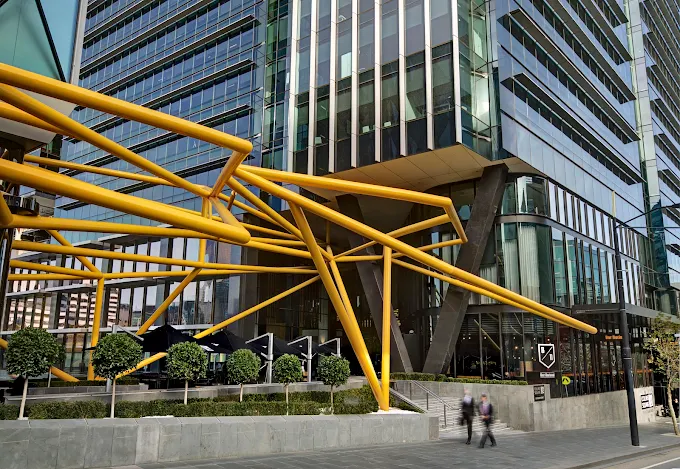
Location
727 Collins St, Docklands VIC 3008
https://www.collinssquare.com.au/events-meetings/
Centrally located at 727 Collins Street, Collins Square is easily accessible via vehicle, public transport and integrated walking and cycling routes.
The convenient proximity of 5,000-plus public car parking spaces makes driving to Collins Square easy. Melbourne Airport is only a 20-minute car trip away. Drive yourself or hail a taxi from one of the dedicated spaces located on the doorstep of Collins Square. These also serve as a practical asset for day-to-day city meetings.
Collins Square is located directly opposite tram stop D15-Batman’s Hill/Collins Street and there are additional tram stops on Flinders Street. Collins Square is just 200 metres from Southern Cross Station where you can access up to 15 different train lines and connections to all V/Line services.
Bicycle paths link Collins Square to various routes out of the city while pedestrian access takes you to Marvel Stadium, Melbourne Convention & Exhibition Centre and Crown Casino.
Getting Here
Registration Enquiries
Talia Meyerowitz-Katz: talia@medicalrepublic.com.au
Program, Content and Panelist Enquiries
Talia Meyerowitz-Katz: talia@medicalrepublic.com.au
Partnership Opportunity Enquiries
Greta Reed: greta@healthservicesdaily.com.au